Posted on

Today, we send you warm greetings from Wizzair. Good morning!


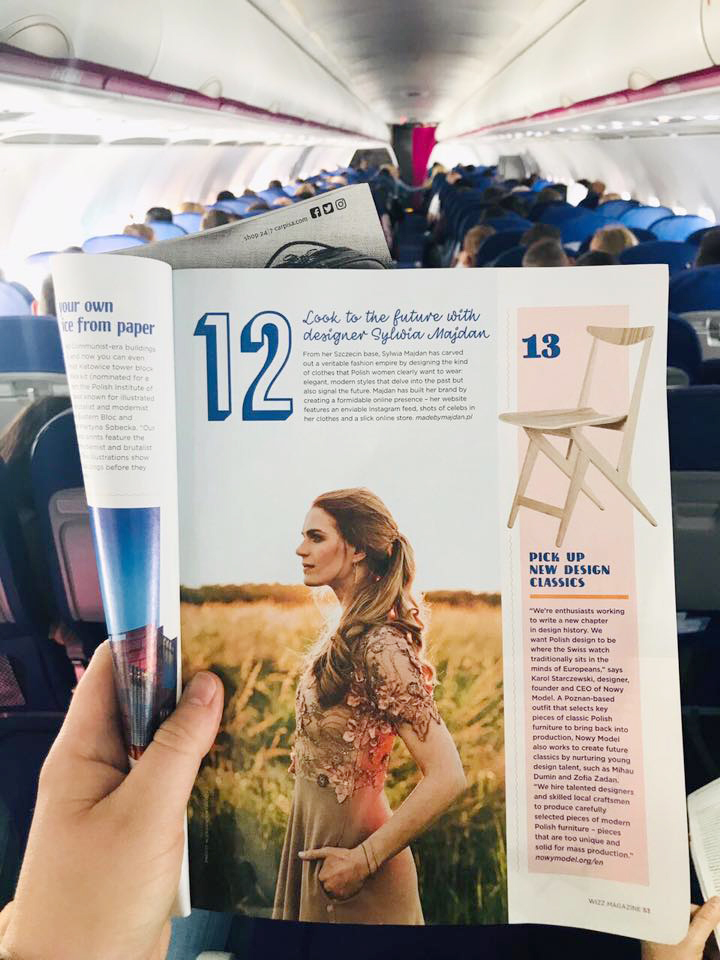
Good morning❗️ Today we send you warm greetings from the deck wizzair.com ??✈️ Nowy Model has been added to the list of the most interesting design projects worth exploring while traveling in Poland. Thank you, we highly recommend you visit us, and we cordially invite you to join us. ?


Posted on

#We choose Polish Design

# I choose Polish Design is a nationwide campaign organized by GOOD INSIDE and PLN design – Inspiring information about design, interiors and architecture.

▪ Its aim is to promote young Polish brands. Ten furniture and lighting manufacturers who fit the definition of "good Polish design" were invited to the project, including New model. Functionality, unique design, quality materials, and production made in Poland. We want to show that Polish design is in great shape and within reach.

▪ At the fair Warsaw Home An exhibition of the best works by Polish designers will be presented: ##WybieramPolskiDesign. We cordially invite you to October 4-7, 2018. Bird Warsaw Expo.

➡ We will be waiting for you in Hall D at stand 2.9!
➡ As New model We will show the Dune chair designed by Cyryl Zakrzewski and the Variable Height Shelf by Professor Rajmund Teofil Hałas

DUNE CHAIR

#New Model

designer: Cyryl Zakrzewski


DUNE CHAIR

The work of the Poznań sculptor and designer of the young generation, Cyryl Zakrzewski.
This original and comfortable chair is also an extraordinary sculptural object.
The artist was inspired to create it by sand dunes, gentle curves and the impression of movement caused by the eternally flowing sand.
The DUNE chair is made of birch plywood, hand-carved and finished with natural oil.

ADJUSTABLE HEIGHT BOOKCASE

#New Model

designer: Prof. Rajmund Teofil Hałas


ADJUSTABLE HEIGHT BOOKCASE

A product from the "Icons of Polish Design" series. This simple and functional piece of furniture can be assembled in just a few minutes, without the need for any tools. A unique system of connecting shelves using stainless steel clamps allows for flexible vertical and horizontal configurations. The shelf can be used as either a wall-mounted unit or as a freestanding space divider. The practicality, originality, and versatility of the design have been recognized in numerous competitions.


NEWMODEL

Nowymodel is primarily comprised of enthusiasts who strive to continue the history of Polish design. Thanks to their work, we can admire so many new projects by young Polish designers. Their goal is also to revive designs that were forgotten but are now classics of Polish design.

We invite you to visit the #WybieramPolskiDesign campaign website

http://www.wybierampolskidesign.pl/


Posted on

Assessment of the usefulness of the Good Design program in promoting entrepreneurs' projects, products and companies - report

Do you remember? Good Design Competition for the best designed products and services on the market, organized by Institute of Industrial Design? Do you remember that our Professor Hałas bookcase won this competition in 2016 in the home category?

Now, thanks to funding from Ministry of Culture and National Heritage A report entitled "Assessment of the usefulness of the Good Design program in promoting their projects, products and companies by entrepreneurs" was prepared. It is very interestingA new item for everyone involved in design and design can be read here:


See the report>
Good Design 2016 Winners>


Posted on

Rajmund Teofil Hałas – what do we know about the professor?

Visual artist, architect, furniture designer.

He was born in Krobia, Greater Poland, into a family with a long tradition of carpentry, begun by his great-grandfather Jakub Węcławski in the mid-19th century. Jakub's workshop was taken over by his son-in-law, Franciszek Hałas, who taught his son Teofil the trade. He, in turn, built a furniture factory in 1922. The family tradition was continued by Teofil's sons, Zygmunt and Rajmund Teofil, who, after studying at the Carpentry and Sculpture High School in Cieplice-Zdrój, obtained a master carpenter's diploma.

In 1951, Rajmund T. Hałas began his studies at the State Higher School of Fine Arts (PWSSP) in Poznań at the Faculty of Interior Design, graduating with a diploma under the supervision of Professor Jerzy Staniszkis.

After graduating, he became involved in the furniture industry, managing a Furniture Design Studio that served the entire industry. His designs included the VARIABLE HEIGHT SHELF (1959) and the RED – WHITE – BLACK chair series (1957–62).

In 1960, he founded the Koło group with Czesław Kowalski (author of MEBLOŚCIANKI KOWALSKICH), Leonard Kuczma, and Janusz Różański. This group initiated efforts to organize a Furniture Biennale in Poznań. Less than twenty years later (in 1978), the Organizing Committee of the First International Furniture Triennial was established.

In 1964, he was on a scholarship to the Helsinki Institute of Industrial Arts, and a year later, to Great Britain. There, he encountered artists of such stature as Alvar Aalto and Gordon Russell. His travels to the West led to the establishment of the Department of Industrial Design at the State Higher School of Fine Arts in Poznań in 1971, where he led the Inspirational Design Studio. He remained associated with the Poznań university until the end of his exceptionally active life. After his retirement as a professor, he served as a consultant at the Department of Design and lectured on the history of architecture and design at the Faculty of Architecture and Design.
On the initiative of Marek Hałas, the Professor's nephew, the Museum of Carpentry and Bishopric was established in the buildings of his grandfather Teofil's former furniture factory in Krobia, under the patronage of Rajmund Teofil Hałas.

PROJECTS:
http://nowymodel.org/project/regal-o-zmiennych-wysokosciach/
http://nowymodel.org/project/taboret-imugo/
http://nowymodel.org/project/kawa-i-papierosy/


Posted on

The Primer of Polish Design in Poznań – exhibition at the School of Form

Na wystawie Elementarz Polskiego Designu – wystawa w School of Form znajdziecie 100 najważniejszych projektów polskiego designu ostatniego stulecia, a wśród nich „Regał o zmiennych wysokościach” projektu prof. Rajmunda T. Hałasa, jednego z najwybitniejszych polskich projektantów, założyciela Katedry Wzornictwa Przemysłowego na Uniwersytet Artystyczny w Poznaniu. Zaprojektowany w 1959 został rekonstruowany i po raz pierwszy wdrożony do produkcji przez nowymodel.org w 2013 r.

Z A P R A S Z A M Y!

wernisaż: 16 listopada godz. 18.00

Międzynarodowe Targi Poznańskie, hala nr 1
School of Form,
ul. Głogowska 18, Poznań

Wystawę można będzie oglądać do 13 grudnia


Posted on

INVITATION / Premiere of the monograph devoted to Prof. RT Hałas

Premiera monografii poświęconej prof. R. T. Hałasowi – zaproszenie

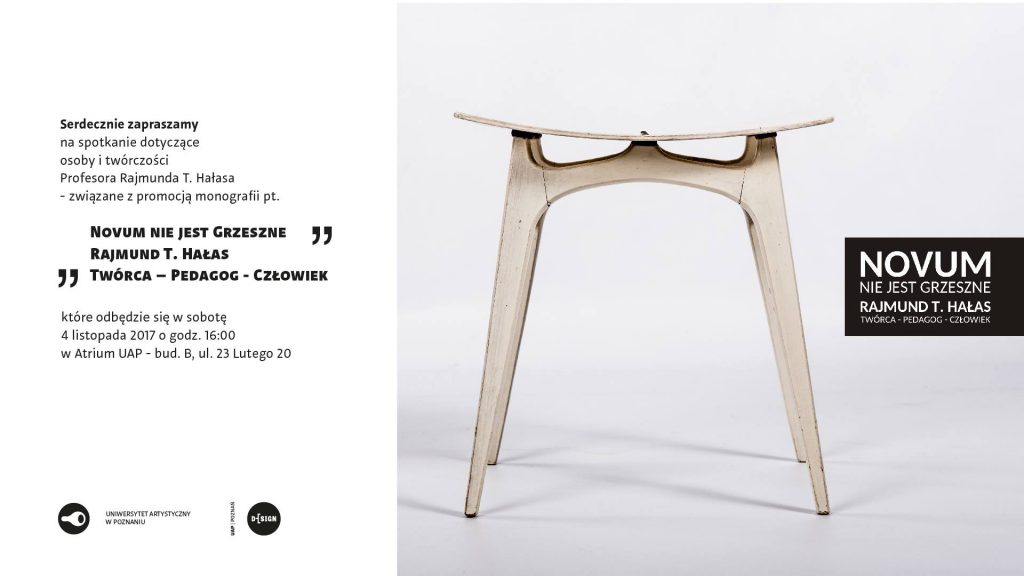
Serdecznie zapraszamy na spotkanie związane z promocją monografii „Novum nie jest grzeszne” (Oprac. Jadwiga Filipiak). Publikacja poświęcona jest twórczości i życiu prof. Rajmunda Teofila Hałasa, jednego z najwybitniejszych polskich projektantów, założyciela Katedry Wzornictwa Przemysłowego w PWSSP w Poznaniu., którego twórczość i spuściznę w nowymodel.org systematycznie przybliżamy miłośnikom designu. Organizatorem spotkania jest Uniwersytet Artystyczny w Poznaniu.

4 listopada (sobota) 2017, godz. 16.00
Atrium UAP, bud. B
ul. 23 Lutego 20 (wejście także od Al. Marcinkowskiego 29)

W ramach serii „Ikony Polskiego Designu” nowymodel.org wdrożył do produkcji następujące meble zaprojektowane prof. R.T. Hałasa:

Regał o zmiennych wysokościach

Regał zaprojektowany w 1959 r., po raz pierwszy wdrożony do produkcji przez nowymodel.org w 2013 r.

Taboret IMUGO

Taboret z 1960 roku, po raz pierwszy wdrożony do produkcji przez nowymodel.org w 2014 r.

Stolik kawowy KAWA i PAPIEROSY

– Nie pamiętam, kiedy dokładnie powstał ten projekt. Prototyp mamy od wczesnych lat 60. Mąż mówił o tym stoliczku KAWA I PAPIEROSY… – wspominała Pani Stanisława Hałasowa, pokazując nam to cudo. Po raz pierwszy wdrożony do produkcji przez nowymodel.org w 2014 r.

Krzesła CZERWONY, BIAŁY, CZARNY

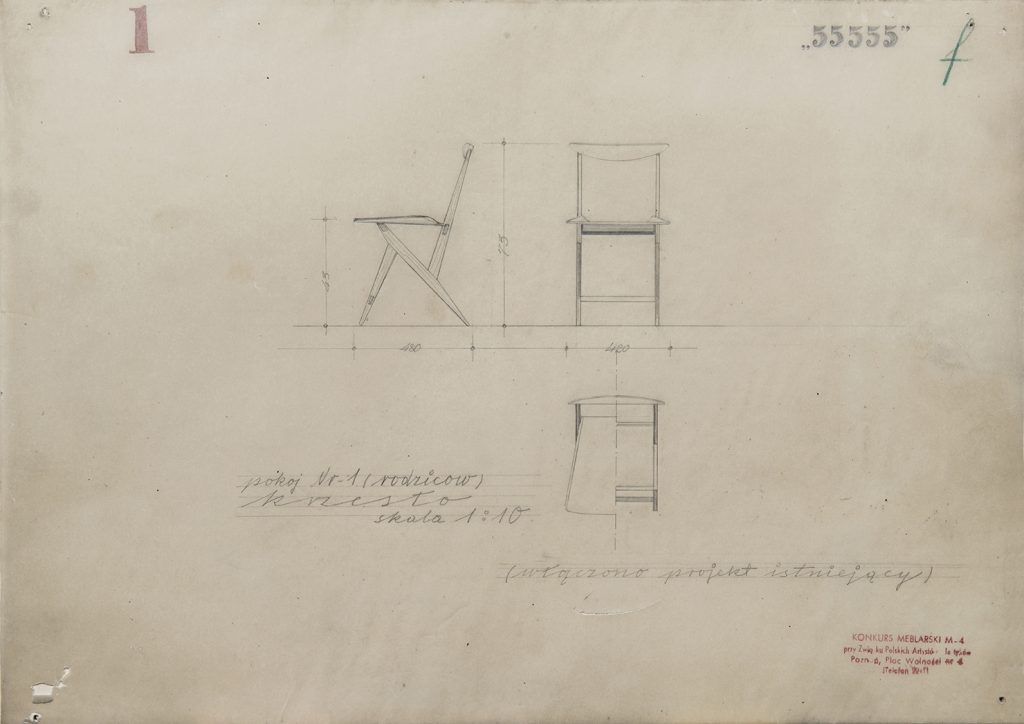
Zaprojekowane w latach 1957-62, ich prototypy wykonane w latach 60. nie weszły do produkcji, przetrwały jednak w zbiorach rodzinnych w Krajkowie. Po ponad 60 latach zrekonstruowane i po raz pierwszy wdrożone do produkcji przez nowymodel.org w 2017.

Źródło:

http://uap.edu.pl/2017/10/rajmund-t-halas-prezentacja-tworczosci-i-promocja-ksiazki/


Posted on

The president of nowymodel.org, about our "Kowalski Chair" for Take Me To Design.

Julia Starczewska-Zakrzewska, president of nowymodel.org, about our "Kowalski Chair" for Take Me To Design:

A product from the "Icons of Polish Design" series. This classic chair, designed by the renowned Poznań interior designers and architects Bogusława and Czesław Kowalski, was originally part of their legendary wall unit set from the communist era, but it never went into production. It was only thanks to nowymodel.org that it finally took shape and has been available on the market since 2014.
Light, slim, and stylish, each chair is handmade from beech wood and bent plywood covered with natural chestnut veneer, resulting in varying shades and grain patterns.

More:


Posted on

The ABCs of Polish Design

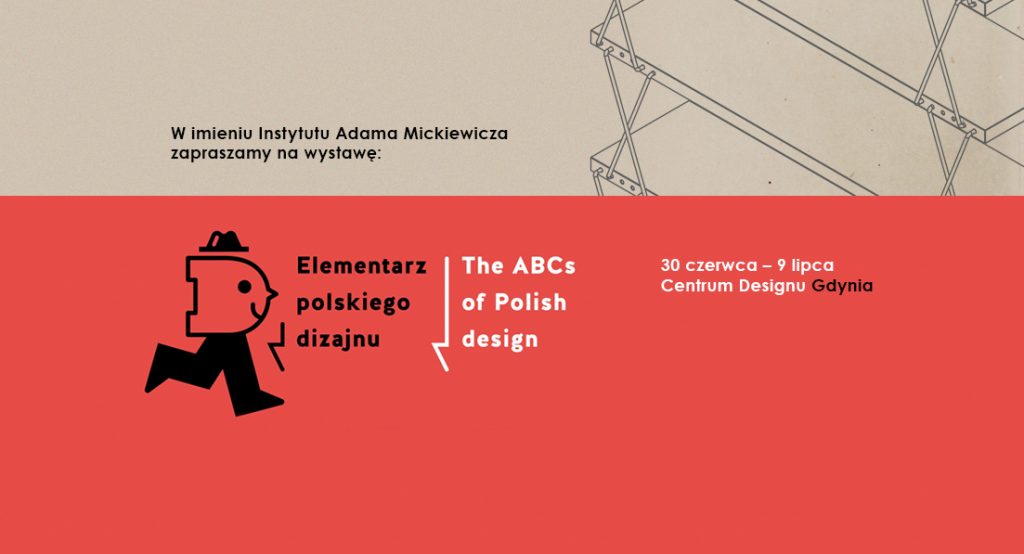
Together with the Adam Mickiewicz institute we're counting down towards the opening of the Gdynia Design Days Festival, hosting the ABCs of Polish Design – an exhibition showing 100 most important Polish designs of the last century, and among them, the „adjustable height bookcase” by prof. Rajmund T. Hałas.

The exhibition will take place in Gdynia first, from 30th of June to 9th of July 2017, and will be moved to Budapest afterwards, where it's going to be available for another month, September 25th to October 25th 2017.

The exhibtion is organized by the Adam Mickiewicz Institute / Culture.pl
Co-organized by: Gdynia Design Days and Regional Museum in Stalowa Wola
Supported by Niepodległa, and program by the Ministry of Culture and National Heritage


„"…One hundred years – one hundred Polish designs. During the Gdynia Design Days, The ABCs of Polish Design exhibition will present some of the most important Polish designs of the past century.

It's not easy to show one hundred years of Polish design in just one hundred objects. Which ones were really the most important? The most intriguing? How does one choose? How does one show more than just the iconic designs that everyone knows?

In Gdynia, The ABCs of Polish Design exhibition will present the best of Polish product design – furniture, ceramics and glassware – and more: typography, toys, sporting equipment and even sweets! Contemporary design will be presented alongside classic designs and everyday favorites. The exhibition is a journey through the history of Polish design: the pieces are presented in chronological order.

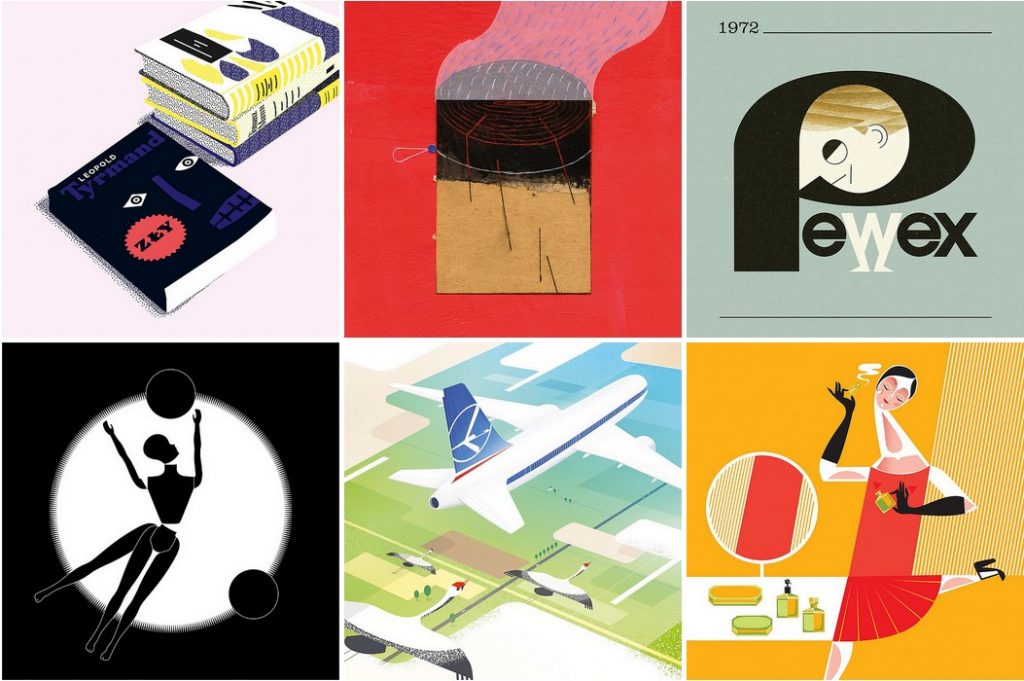
The exhibition will also present interpretations of these design icons – twenty-five contemporary Polish illustrators and graphic designers were asked to share their visual interpretations of the pieces on display. Moreover, the exhibition will also share the stories behind each of the designs: find out about the designers, their inspirations and their creative process.

Illustrators & graphic designers who contributed to the exhibition:
Jacek Ambrożewski, Edgar Bąk, Maciek Blaźniak, Katarzyna Bogucka, Ada Buchholc, Iwona Chmielewska, Robert Czajka, Agata Dudek, Emilia Dziubak, Małgorzata Gurowska, Monika Hanulak, Marta Ignerska, Tymek Jezierski, Paweł Jońca, Agata Królak, Grażka Lange, Patryk Mogilnicki, Piotr Młodożeniec, Ania Niemierko, Ola Niepsuj, Marianna Oklejak, Paweł Pawlak, Dawid Ryski, Marianna Sztyma

The exhibition is organized by the Adam Mickiewicz Institute as part of its Polska Design program promoting Polish design worldwide. The exhibition is co-organized by:
– the Gdynia Design Days is an annual festival showcasing the latest trends and best practices in the field of design. Brimming with inspiring exhibitions, lectures, workshops and discussions the program is aimed at both professionals, young entrepreneurs and design enthusiasts looking for inspiration for creative activities and creative leisure time. For the 10 days in July Gdynia becomes the best summer meeting place for the design industry.
http://gdyniadesigndays.eu/
– and the Regional Museum in Stalowa Wola.

The presentation has been produced as part of the international cultural program accompanying Poland's centenary of regaining independence Independent…”


Posted on

The ABCs of Polish Design exhibition


Together with Adam Mickiewicz Institute we are counting down to the start of the festival Gdynia Design Days during which the exhibition will take place The ABCs of Polish Design which will showcase the 100 most important Polish design projects of the last century, including the "Variable Height Shelf" designed by Professor Rajmund T. Hałas.
WE INVITE YOU.

The exhibition will be on view in Gdynia from June 30 to July 9, 2017. It will then move to Budapest, where it will be open to the public for a month, from September 25 to October 25, 2017.

The exhibition is organised by the Adam Mickiewicz Institute / Culture.pl
Co-organizers: Gdynia Design Days, Regional Museum in Stalowa Wola
Project supported by the Ministry of Culture and National Heritage Program Independent


„…The 100 most important Polish design projects from the last century will be exhibited in Gdynia between June 30 and July 9, 2017. The exhibition will then move to Budapest, where it will be open to visitors for a month, from September 25 to October 25, 2017.

It's not easy to showcase 100 years of Polish design by limiting yourself to just 100 objects. How do you choose the most important elements? How do you avoid the temptation to showcase only icons? How do you engage more than just experts? How do you showcase the diversity of design disciplines?

Among the 100 projects, next to furniture, glass and porcelain, i.e. items commonly associated with design, there were things such as:The most obvious: typefaces, logos, children's toys, a locomotive, a neon sign, a glider, a scooter, and even the tastiest Polish treat, Ptasie Mleczko, and the rubber ring, Ringo – a Polish sports game. Presented are both contemporary designs and those that have already earned the title of classic. Unique pieces, bordering on individual works of art; prototypes that never entered mass production; but also very popular items that Poles have used daily for the past 100 years.

This exhibition also connects the past with the present, showcasing the legacy of Polish design through the achievements of contemporary Polish graphic design. The "Primer" exhibition presents 100 works by Polish designers interpreted by twenty-five Polish illustrators – artists with very diverse backgrounds: experienced masters of the Polish School of Illustration, illustrators of the young and middle generation currently winning awards worldwide, and young artists who have just graduated. Most of the invited graphic designers illustrate children's books while also working in the broad field of visual communication. They represent a variety of styles and techniques, but all share a common talent.

The exhibition is not only 100 objects and 100 artistic interpretations of them, but also 100 stories: about designers, needs, dreams, possibilities, and limitations. It tells more than just specific projects. It also reveals the design process, how ideas are created, and ultimately, the incredible concept of design – the art form closest to humanity, one that surrounds us all, one that we interact with every day, and one that we couldn't live without, though we often don't realize it.

The chronological presentation of the projects highlights how, throughout the 100-year history of Polish design, certain materials, themes, and forms recur, constantly taking on new forms. The exhibition is aimed at a wide audience, including the youngest generation. It was created to commemorate the centenary of Poland's independence.

The exhibition is curated by Ewa Solarz. Participating illustrators include: Jacek Ambrożewski, Edgar Bąk, Maciek Blaźniak, Katarzyna Bogucka, Ada Buchholc, Iwona Chmielewska, Robert Czajka, Agata Dudek, Emilia Dziubak, Małgorzata Gurowska, Monika Hanulak, Marta Ignerska, Tymek Jezierski, Paweł Jońca, Agata Królak, Grażka Lange, Patryk Mogilnicki, Piotr Młodożeniec, Ania Niemierko, Ola Niepsuj, Marianna Oklejak, Paweł Pawlak, Dawid Ryski, Marianna Sztyma, and Ola Woldańska-Płocińska.

The exhibition is organised by the Adam Mickiewicz Institute operating under the Culture.pl brand.

Co-organizers:
Gdynia Design Days This annual festival showcases the latest trends and best practices in design. The program, packed with inspiring exhibitions, lectures, workshops, talks, and discussions, is aimed at professionals, young entrepreneurs, and enthusiasts seeking inspiration for creative endeavors and creative pastimes. For 10 days in July, Gdynia becomes the premier summer meeting place for the design industry. Gdynia is also the only design festival in Poland where prototypes with a chance of implementation are created.
http://gdyniadesigndays.eu/
Regional Museum in Stalowa Wola....”
 

Posted on

“Kowalski's Chair” exhibition.

We cordially invite you to the opening of the exhibition “Kowalski's Chair”.

Thursday, June 22nd 2017 / 7 pm / SH Studio (Wilcza 44) / Warsaw

curators: Cyryl Zakrzewski/ Piotr Szpilski

The exhibition will be available until June 29th, from Monday to Saturday (Monday from 1 to 7 pm., Teusday – Friday from 11 am to 6 pm and Saturday from 2 pm to 6 pm)

A classic chair designed by the famous couple of designers and interior architects from Poznań, Bogusława and Czeslaw Kowalski, had originally been a part of their legendary “wall-set”, but never entered production. Only since 2014, thanks to nowymodel.org it has finally become material reality and is now available on the market.

It is light, slim and stylish. Each piece is made by hand of bent beech plywood covered with natural chestnut veneer, which gives it its unique tinge and graining.

Kowalski's chair is an ideal example of how the sixty-years old vision of modernity, thanks to its simplicity, ergonomics and innovative character, is still perfectly up-to-date and that design can be an important element of our common identity.