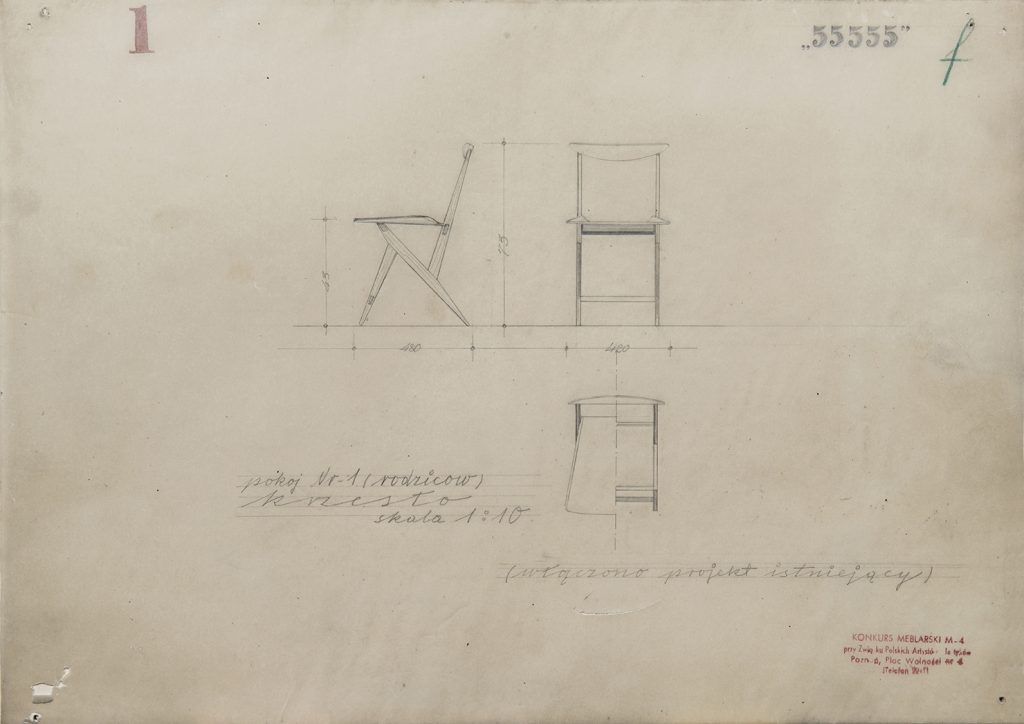
This classic chair, designed by the famous Poznań interior designers and architects Bogusława and Czesław Kowalski, was originally part of their legendary wall unit set from the communist era, but it never went into production. Only thanks to nowymodel.org gained its material shape.
Light, slim, and stylish, each chair is handmade from bent beech plywood and covered with natural chestnut veneer, resulting in varying shades and grain patterns.
The Kowalski chair is a perfect example of how the vision of modernity from over 60 years ago, thanks to its simplicity, ergonomics and innovation, remains relevant today, and Polish design is an important element of our common identity.
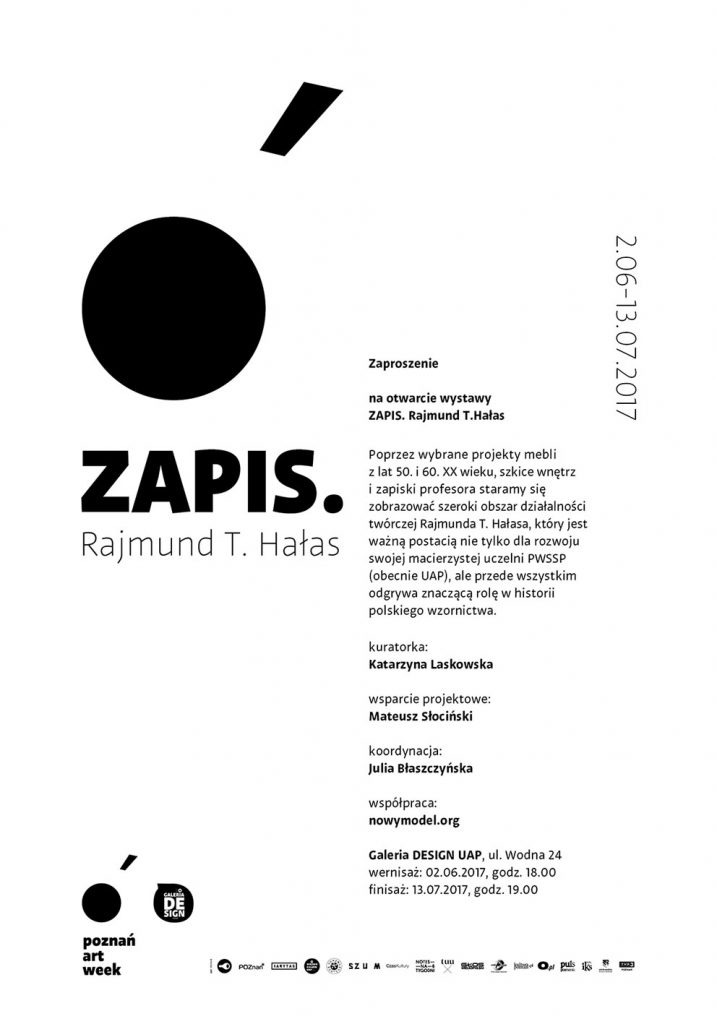
2.06.2017 – 13.07.2017 Opening day: June 2, 6:00 PM Closing day: 13/07/2019, 7:00 PM Design UAP Gallery Wodna Street 24 Curator: Katarzyna Laskowska Planning Support: Mateusz Słociński Coordinator: Julia Błaszczyńska In collaboration with:nowymodel.org
“Designing, in whole it's process is an art of decision-making. The wider the knowledge of the designer, and the freer the way they think, the more accurate a decision will be made.”
RT Hałas, "Poznań furniture school, some reflections".
RT Hałas, "Poznań furniture school, some reflections".
RECORD. Rajmund T. Hałas is the first of a series of exhibitions presenting the output of Wielkopolska's designers associated with the University of Arts in Poznań. The exhibition shines a light on the creative and didactic phenomenon of Rajmund T. Hałas. The professor is important not only for his alma mater, the PWSSP(Currently UAP), but above all else, for the history of Polish design. He learned the ropes of the art of carpentry in his family town, Krobia.
Currently, his family factory hosts the Museum of Woodwork and Local Folklore, led by Rajmund Teofil Hałas' Krob Land Foundation. During his academic years in Poznań, Rajmund T. Hałas studied under Prof. Jerzy Staniszkis, Prof. Jan Bogusławski, Prof. Jan Węcławski, and Prof. Jan Cieśliński.
The professor has shaped generations of designers, including his first assistant Jadwiga Filipiak, Tomasz Matuszewski, Sylwester Kluś, Jacek Patyk, and Bogumiła Jung. The generation of designers that followed included, among others, Bogdan Cieślak, Tomasz Wojtkowiak, Dorota Koziara, Tomasz Augustyniak, and Mikołaj Wierszyłowski. One of the more important milestones in the history of the university was 1971, when Rajmund T. Hałas created the Department of Industrial Form Design at PWSSP, later transforming it into the Department of Industrial Design.
The essence of Rajmund T. Hałas' work is the way his creative activities are intertwined with one another: design, didactics, art, and the development of the area of his expertise. Through a selection of furniture designs from the 50's and 60's we're showing both the mass-produced ones, like part of the Type 1329 set, prototypes of the seats that haven't made it to production, and the 2013 reeditions of his furniture. Since the late 50's Rajmund T. Hałas has worked for the furniture industry, designing ’New Furniture Projects’ for the CORM(Later OBROM). He's created numerous designs that the Union of Furniture Industry in Poznań has put in their catalogs. After being presented at domestic fairs, the professor's designs have been bought and introduced to mass production. Some of the designs had survived in records, mockups, and prototypes; a few of them ended up in private collections. Based on said mockups, or just the schematics, nowymodel.org has developed and began the production of three groups of furniture, from the Adjustable Height Bookcase in 2013, through the Coffee and Cigarettes coffee table, to the IMUGO stool.
Professor Zdzisław Kępiński, in his summary of the 50's says: ’furniture, as a field of study, was becoming an indicator of the practical functions of a room, thus becoming part of architecture (…) operating as modern architectural integration.“ He also remarks that it is since the 50's that the term of so-called Poznań School in furniture design has been coined – a term that was still widely used as of 1971. An another name for this phenomenon, in which Rajmund T. Hałas has played a key role, is the Poznań School of Furniture. [1]
The exhibitions brings back the parallel areas of the professor's active work towards the development of design. Rajmund T. Hałas has founded KOŁO, a group consisting of Czesław Kowalski, Leonard Kuczma, and Janusz Różański. In 1960, said group of designers had initiated numerous actions leading to the advancement of design as a whole. They've begun working to organize a Furniture Triennial in Poznań. Less than 20 years later (1978), an Organizational Committee of the 1st International Furniture Triennial has been brought to life. The 1980 Poznań International Fair has hosted the 1st International Furniture Triennale, a platform for intercultural exchange for designers, technologists, producers, and critics, with Witold Gyurkovich as the head of its office.
In 1980, Carlo Bartoli, one of the Triennial's jury wrote: Furniture and household items are full of meanings perceivable through their form. Currently they are a reflection of the history of civilization and techniques of the societies that manufactured them, and the way they're used shows the evolution of customs in our society. (…) The shape of an item is like a word in spoken language – one needs to know the rules of word linking in order to speak. Analogically, to design furniture, the knowledge of the rules of form is neccessary, both from the expression's and the technique's point of view.”[2]. Perhaps the ZAPIS Rajmund T. Hałas will become a spark to reignite the – still important – idea of the Furniture Triennale in Poznań?
[1] Zdzisław Kępiński, 1919-1969 PWSSP in Poznań, 1971.
[2] Carlo Bartoli, Furniture Triennial Catalogue, 1980.
curator: Katarzyna Laskowska design support: Mateusz Słociński coordination: Julia Błaszczyńska cooperation: nowymodel.org
„"Design, throughout its entire process, is the art of decision-making. The more extensive the designer's knowledge and the freer their way of thinking, the more accurate the decision-making will be.".
RT Hałas, "Poznań furniture school, some reflections".
RECORDED. Rajmund T. Hałas This is the first in a series of exhibitions aimed at showcasing the work of designers from Greater Poland associated with the University of Arts in Poznań. The exhibition explores the creative and teaching phenomena of Rajmund T. Hałas. The professor is an important figure not only in the development of his alma mater, the State Higher School of Fine Arts (now the University of Arts in Poznań), but above all, plays a significant role in the history of Polish design. He first learned the secrets of carpentry at his home school in Krobia. Currently, the family furniture factory houses the Museum of Carpentry and Bishopric, run by the Krobska Region Foundation named after Professor Rajmund Teofil Hałas. While studying in Poznań, Rajmund T. Hałas was a student of Professor Jerzy Staniszkis, Professor Jan Bogusławski, Professor Jan Węcławski, and Professor Jan Cieśliński. He has educated generations of design personalities, including his first assistant Jadwiga Filipiak, Tomasz Matuszewski, Sylwester Kluś, Jacek Patyk and Bogumiła Jung. The next generation of designers included Bogdan Cieślak, Tomasz Wojtkowiak, Dorota Koziara, Tomasz Augustyniak, and Mikołaj Wierszyłowski. A significant event in the school's history was the establishment of the Department of Industrial Design at the State Higher School of Fine Arts in 1971 by Rajmund T. Hałas, later renamed the Department of Industrial Design.
The essence of Rajmund T. Hałas's work is the intertwining of creative fields: design, teaching, art, and the development of the design discipline. Through selected furniture designs from the 1950s and 1960s, we present mass-produced furniture – a fragment of the Type 1329 set, prototypes of seats that were never put into production, and reissues of furniture available since 2013. From the second half of the 1950s, Rajmund T. Hałas worked for the furniture industry, designing "New Furniture Designs" for the Central Centre for Furniture Development in Poznań (CORM), later OBROM. He created many designs, which the Poznań Furniture Industry Association included in its catalogs. After being presented at national fairs, the professor's designs were purchased by manufacturing plants and implemented into mass production. Some furniture designs have survived in the form of documentation, models, and prototypes. Several pieces are now part of private collections. Based on these models, or simply the designs, the company nowymodel.org developed and introduced into production three groups of furniture, starting from Shelves with variable heights in 2013, after coffee and cigarettes table and in the following years a stool IMUGO.
Professor Zdzisław Kępiński, summarizing the decade of the 1950s and 1960s, states: "the furniture trend became an exponent of the practical functions of a room, thus becoming part of architecture (...) based on the principle of modern architectural integration." He also notes that from this period onward, the concept of the so-called Poznań School of furniture design was established, and has been widely used since then (1971). Another name for the same phenomenon, in which Rajmund T. Hałas played a significant role, is the "Poznań School of Furniture.".[1]
The exhibition revisits the parallel areas of the professor's active work in developing the discipline of design. Rajmund T. Hałas was the founder of the KOŁO group, which included Czesław Kowalski, Leonard Kuczma, and Janusz Różański. In 1960, this group of designers initiated activities to develop the discipline of design and began work on organizing the Poznań Furniture Triennial. Less than twenty years later (in 1978), the Organizing Committee of the First International Furniture Triennial was established. The First International Furniture Triennial took place at the Poznań International Fair in 1980, providing a platform for intercultural exchange for designers, technologists, manufacturers, and critics. Witold Gyurkovich was the head of the First Furniture Triennial office.
Carlo Bartoli, one of the jury members of the Furniture Triennial, wrote in 1980: "Furniture and household items are full of meanings discernible through their form. They now represent the history of civilization and the techniques of the societies that produced them, and their current use reveals the evolution of customs in our society. (...) The shape of objects is like the words of a spoken language; to speak, one needs to know the rules of combining words. Similarly, to design furniture, one needs to know the rules governing form, both from the point of view of expression and technique."„[2]. Perhaps the ZAPIS Rajmund. T. Hałas exhibition will become an impulse to continue the ever-present idea of the Poznań Furniture Triennial?
[1] Zdzisław Kępiński, 1919-1969 State Higher School of Fine Arts in Poznań, 1971.
[2] Carlo Bartoli, Catalog of the Furniture Triennial, 1980.
Product from the "Icons of Polish Design" series. A shelf with variable heights – designed in 1959 by Professor Rajmund Teofil Hałas, the late master of Polish design (artist, architect and furniture designer) was nominated by experts to participate in the competition for the best designed products and services on the Polish market Dobry Wzór 2016. The shelf was put into production by nowymodel.org 3 years ago.
Product from the "Icons of Polish Design" series. Our collection of furniture designed by Professor Rajmund Teofil Hałas has expanded to include the IMUGO stool. It owes its name to its mature and refined form, yet at the same time as light as an insect's wings, subtle, and graceful. Working on it was a pleasure. Thank you, Master! IMUGO stools vary in frame and seat colors. The frame is available in two colors: white and natural beechwood. The seats will be available in natural veneer, white, and celadon. Stools Covered with natural chestnut veneer, they vary in shade and grain. Wood is beautiful because it is variable. nowymodel.org is the first to share the designs. Material: solid beech wood, seat – plywood Color: frame – painted or natural beech color, seat – painted or veneered plywood (walnut) Dimensions: 44 x 39 x 28 cm Libra: 1.8 kg


 Product from the "Icons of Polish Design" series.


 EN
EN  PL
PL