Posted on

The Primer of Polish Design in Poznań – exhibition at the School of Form

Na wystawie Elementarz Polskiego Designu – wystawa w School of Form znajdziecie 100 najważniejszych projektów polskiego designu ostatniego stulecia, a wśród nich „Regał o zmiennych wysokościach” projektu prof. Rajmunda T. Hałasa, jednego z najwybitniejszych polskich projektantów, założyciela Katedry Wzornictwa Przemysłowego na Uniwersytet Artystyczny w Poznaniu. Zaprojektowany w 1959 został rekonstruowany i po raz pierwszy wdrożony do produkcji przez nowymodel.org w 2013 r.

Z A P R A S Z A M Y!

wernisaż: 16 listopada godz. 18.00

Międzynarodowe Targi Poznańskie, hala nr 1
School of Form,
ul. Głogowska 18, Poznań

Wystawę można będzie oglądać do 13 grudnia


Posted on

INVITATION / Premiere of the monograph devoted to Prof. RT Hałas

Premiera monografii poświęconej prof. R. T. Hałasowi – zaproszenie

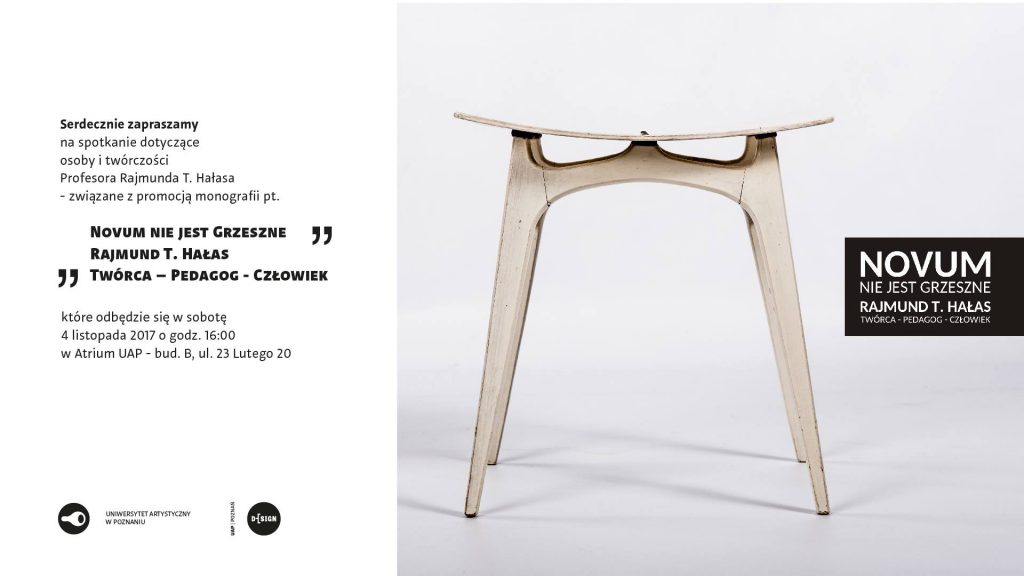
Serdecznie zapraszamy na spotkanie związane z promocją monografii „Novum nie jest grzeszne” (Oprac. Jadwiga Filipiak). Publikacja poświęcona jest twórczości i życiu prof. Rajmunda Teofila Hałasa, jednego z najwybitniejszych polskich projektantów, założyciela Katedry Wzornictwa Przemysłowego w PWSSP w Poznaniu., którego twórczość i spuściznę w nowymodel.org systematycznie przybliżamy miłośnikom designu. Organizatorem spotkania jest Uniwersytet Artystyczny w Poznaniu.

4 listopada (sobota) 2017, godz. 16.00
Atrium UAP, bud. B
ul. 23 Lutego 20 (wejście także od Al. Marcinkowskiego 29)

W ramach serii „Ikony Polskiego Designu” nowymodel.org wdrożył do produkcji następujące meble zaprojektowane prof. R.T. Hałasa:

Regał o zmiennych wysokościach

Regał zaprojektowany w 1959 r., po raz pierwszy wdrożony do produkcji przez nowymodel.org w 2013 r.

Taboret IMUGO

Taboret z 1960 roku, po raz pierwszy wdrożony do produkcji przez nowymodel.org w 2014 r.

Stolik kawowy KAWA i PAPIEROSY

– Nie pamiętam, kiedy dokładnie powstał ten projekt. Prototyp mamy od wczesnych lat 60. Mąż mówił o tym stoliczku KAWA I PAPIEROSY… – wspominała Pani Stanisława Hałasowa, pokazując nam to cudo. Po raz pierwszy wdrożony do produkcji przez nowymodel.org w 2014 r.

Krzesła CZERWONY, BIAŁY, CZARNY

Zaprojekowane w latach 1957-62, ich prototypy wykonane w latach 60. nie weszły do produkcji, przetrwały jednak w zbiorach rodzinnych w Krajkowie. Po ponad 60 latach zrekonstruowane i po raz pierwszy wdrożone do produkcji przez nowymodel.org w 2017.

Źródło:

http://uap.edu.pl/2017/10/rajmund-t-halas-prezentacja-tworczosci-i-promocja-ksiazki/


Posted on

The president of nowymodel.org, about our "Kowalski Chair" for Take Me To Design.

Julia Starczewska-Zakrzewska, president of nowymodel.org, about our "Kowalski Chair" for Take Me To Design:

A product from the "Icons of Polish Design" series. This classic chair, designed by the renowned Poznań interior designers and architects Bogusława and Czesław Kowalski, was originally part of their legendary wall unit set from the communist era, but it never went into production. It was only thanks to nowymodel.org that it finally took shape and has been available on the market since 2014.
Light, slim, and stylish, each chair is handmade from beech wood and bent plywood covered with natural chestnut veneer, resulting in varying shades and grain patterns.

More:


Posted on

LOCOSYSTEM modular furniture nominated for the Marshal of the Wielkopolska Voivodeship Award.

We are pleased to announce that modular furniture LOCOSYSTEM designed by Karol Starczewski were nominated in the competition for the Marshal of the Wielkopolska Voivodeship Award "i-Wielkopolska – Innovative for Wielkopolska" in the Interiors of the Future category.

The second stage of substantive evaluation will take place during the Wielkopolska Smart Specialisation Forum on 1 December 2017.

LOCOSYSTEM is a system of platforms and shelving units with the ability to freely position the shelves vertically and horizontally. Nine different shelf shapes – straight, curved, wave-shaped, and corner – provide virtually unlimited freedom in furniture configuration. They can be used to create shelving units, desks, seats, cabinets, drawers, and many other interior furnishings (each module can be additionally equipped with a back and doors). With the help of LOCOSYSTEM you can separate communication routes and functional spaces, create places for work, play and relaxation.

LOCOSYSTEM allows you to quickly and easily model and change spatial arrangements. Just like using Lego blocks.

It's stable, lightweight, and easy to assemble. It's perfect for both private and public spaces: offices, libraries, editorial offices, and cultural spaces.

The designer's patented screwless mounting system allows for easy assembly of the shelves without the use of tools and for each shelf to be placed anywhere.

Arrangements using LOCOSYSTEM:
http://nowymodel.org/aktualnosci/urzadz-przestrzen-dla-kultury-razem-nowymodel-org-dzieki-locosystem-latwe/

LOCOSYSTEM shelves:
http://nowymodel.org/project/regal-modulowy-locosystem/
LOCOSYSTEM platforms:
http://nowymodel.org/project/podesty-locosystem-2/


Have questions? Want to customize LOCOSYSTEM to your space?
Contact us: info@nowymodel.org


Posted on

Create a space for culture with nowymodel.org. It's easy with LOCOSYSTEM!


nowymodel.org cooperates with cultural institutions by arranging and equipping creative work spaces tailored to the needs of animators and cultural recipients.

The solutions created especially for the team of the Arsenał Municipal Gallery in Poznań and the editorial staff of Czas Kultury are based on the LOCOSYSTEM modular furniture system, designed by Karol Starczewski.

Discover the possibilities of LOCOSYSTEM:
http://nowymodel.org/project/regal-modulowy-locosystem/

Create a space for culture with us!

Have any questions? Contact us: info@nowymodel.org

LOCOSYSTEM is a shelving system with flexible vertical and horizontal shelf arrangement. Nine different shelf shapes – straight, curved, wave-shaped, and corner – offer virtually unlimited freedom in furniture configuration. They can be used to create shelving, desks, seating, cabinets, drawers, and many other interior design elements (each module can be additionally equipped with a backrest and doors). With LOCOSYSTEM, you can designate circulation routes and functional spaces, creating spaces for work, play, and relaxation.

LOCOSYSTEM allows you to quickly and easily model and rearrange spaces, just like using Lego blocks.

It's stable, lightweight, and easy to assemble. It's perfect for both private and public spaces: offices, libraries, editorial offices, and cultural spaces.

The designer's patented screwless mounting system allows for easy assembly of the shelves without the use of tools and for each shelf to be placed anywhere.


Posted on

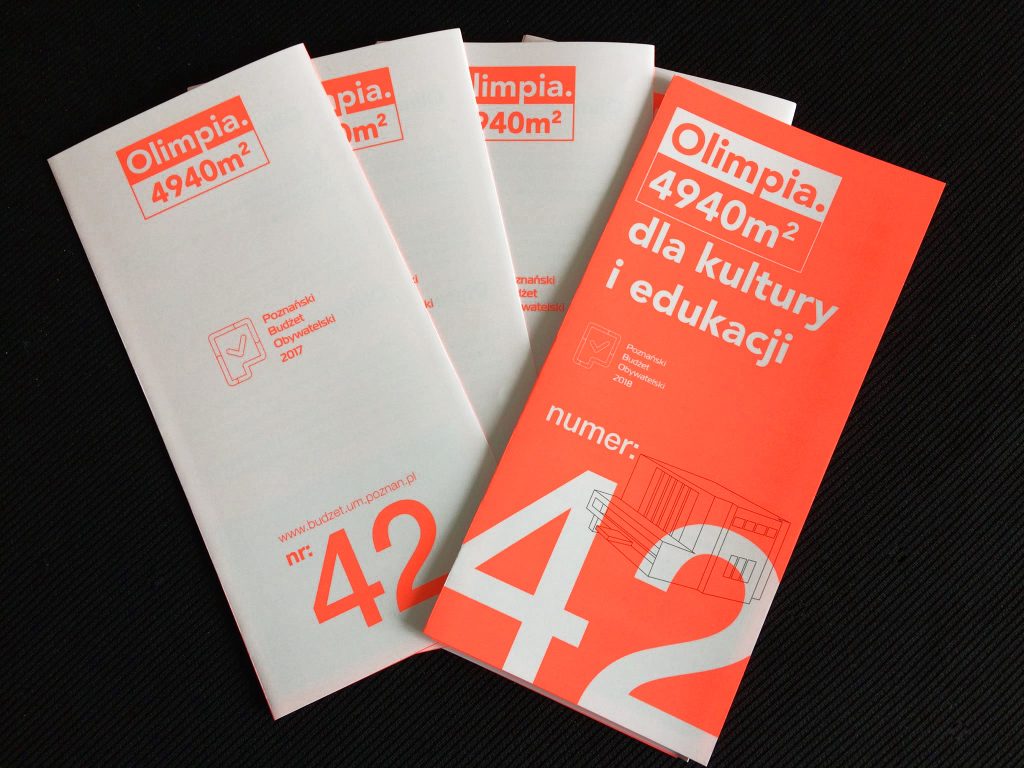
Olimpia. 4,940m² for culture and design – project no. 42 in the Poznań participatory budget

We cordially encourage all lovers of good design from Poznań to vote for Olimpia (project no. 42) in the Poznań Participatory Budget.
Let's bring back Olympia, the city, its inhabitants and local artists.
We need your support to ensure that Olimpia, instead of being a vacant building, becomes a thriving center of culture, art, and education.
City-wide project No. 42 This is a chance to develop its potential. You can vote only for a few more days – until October 30th on the Poznań Participatory Budget website. It will only take you a few moments!

Click and vote

See the project description

____________________________________________

The OLIMPIA Community Cultural Center is a viable response to the growing activity of Poznań residents and the housing shortages faced by even the largest festival organizers. The building's prime location, size, and green courtyard offer the opportunity to create a year-round cultural and educational space. It can accommodate independent theaters, studios, thematic workshops, galleries, rehearsal spaces, offices of associations and aid foundations, and local senior clubs.

The OLIMPIA building, which covers 4,940 square meters, is the only cultural facility in Poznań that is four-fifths vacant. OLIMPIA requires a major renovation, for which, of course, there are no funds.

To continue waiting for a miracle is public waste.

Let's take the first step. We want to use the money for:
✔construction and commissioning of a heating system for the entire building
✔repair of the building's electrical and power installations
✔ elevator replacement

This is why:
✔ We encourage you to become interested in the idea of a Citizens' Budget.
✔We encourage you to vote for project no. 42: Olimpia. 4,940 m2 for culture and education.

Let's create a Social Place of Culture together!

The author of the project to revive Olympia is Adam Ziajski, head of the Working Stage – Center for Theatre Studies


Posted on

New Market by TUTU in Stary Browar!

Today and tomorrow (October 20-21) we cordially invite you to the design and fashion fair at the Atrium of Stary Browar in Poznań.

During New Market by TUTU IMUGO+ stools and bar stools designed by the team will have their premiere nowymodel.org. The inspiration for their creation was the original IMUGO stool designed by Rajmund Teofil Hałas in 1960.
IMUGO+ is adapted to modern standards and requirements. The two stool models differ in height, and the new version of the IMUGO stool is slightly bigger and stronger than the original design.

During the fair we will also show:
Shelf with variable heights – designed by RT Hałas.
Dune chair – designed by. Cyryl Zakrzewski
Dali coffee table – designed by. Mateusz Ligocki and Adam Werda

See you!


Posted on

The ABCs of Polish Design

Together with the Adam Mickiewicz institute we're counting down towards the opening of the Gdynia Design Days Festival, hosting the ABCs of Polish Design – an exhibition showing 100 most important Polish designs of the last century, and among them, the „adjustable height bookcase” by prof. Rajmund T. Hałas.

The exhibition will take place in Gdynia first, from 30th of June to 9th of July 2017, and will be moved to Budapest afterwards, where it's going to be available for another month, September 25th to October 25th 2017.

The exhibtion is organized by the Adam Mickiewicz Institute / Culture.pl
Co-organized by: Gdynia Design Days and Regional Museum in Stalowa Wola
Supported by Niepodległa, and program by the Ministry of Culture and National Heritage


„"…One hundred years – one hundred Polish designs. During the Gdynia Design Days, The ABCs of Polish Design exhibition will present some of the most important Polish designs of the past century.

It's not easy to show one hundred years of Polish design in just one hundred objects. Which ones were really the most important? The most intriguing? How does one choose? How does one show more than just the iconic designs that everyone knows?

In Gdynia, The ABCs of Polish Design exhibition will present the best of Polish product design – furniture, ceramics and glassware – and more: typography, toys, sporting equipment and even sweets! Contemporary design will be presented alongside classic designs and everyday favorites. The exhibition is a journey through the history of Polish design: the pieces are presented in chronological order.

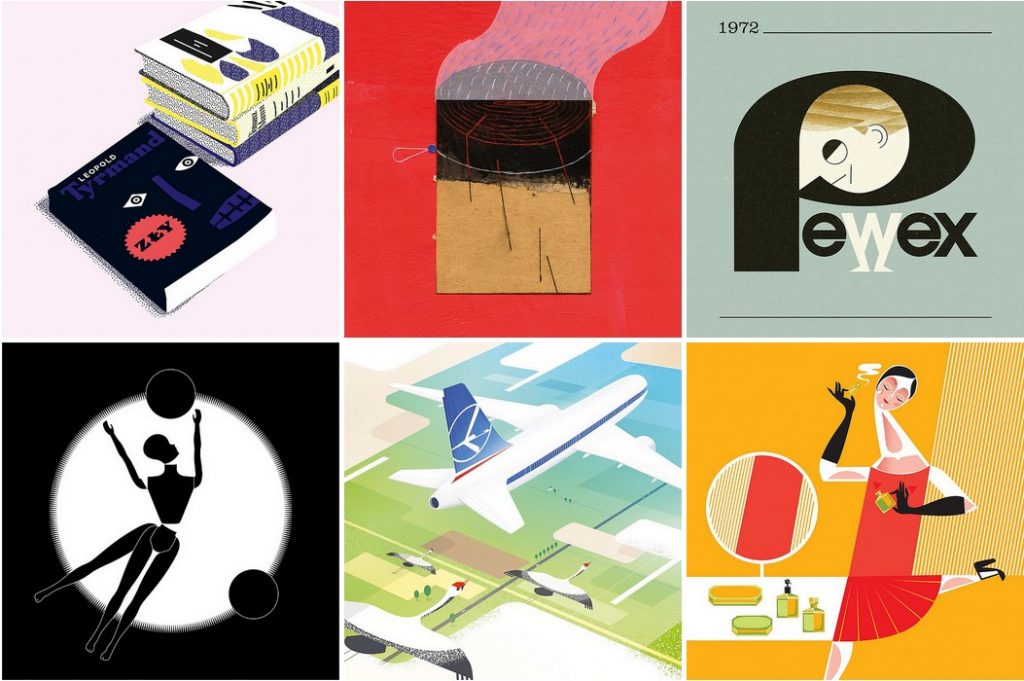
The exhibition will also present interpretations of these design icons – twenty-five contemporary Polish illustrators and graphic designers were asked to share their visual interpretations of the pieces on display. Moreover, the exhibition will also share the stories behind each of the designs: find out about the designers, their inspirations and their creative process.

Illustrators & graphic designers who contributed to the exhibition:
Jacek Ambrożewski, Edgar Bąk, Maciek Blaźniak, Katarzyna Bogucka, Ada Buchholc, Iwona Chmielewska, Robert Czajka, Agata Dudek, Emilia Dziubak, Małgorzata Gurowska, Monika Hanulak, Marta Ignerska, Tymek Jezierski, Paweł Jońca, Agata Królak, Grażka Lange, Patryk Mogilnicki, Piotr Młodożeniec, Ania Niemierko, Ola Niepsuj, Marianna Oklejak, Paweł Pawlak, Dawid Ryski, Marianna Sztyma

The exhibition is organized by the Adam Mickiewicz Institute as part of its Polska Design program promoting Polish design worldwide. The exhibition is co-organized by:
– the Gdynia Design Days is an annual festival showcasing the latest trends and best practices in the field of design. Brimming with inspiring exhibitions, lectures, workshops and discussions the program is aimed at both professionals, young entrepreneurs and design enthusiasts looking for inspiration for creative activities and creative leisure time. For the 10 days in July Gdynia becomes the best summer meeting place for the design industry.
http://gdyniadesigndays.eu/
– and the Regional Museum in Stalowa Wola.

The presentation has been produced as part of the international cultural program accompanying Poland's centenary of regaining independence Independent…”


Posted on

The ABCs of Polish Design exhibition


Together with Adam Mickiewicz Institute we are counting down to the start of the festival Gdynia Design Days during which the exhibition will take place The ABCs of Polish Design which will showcase the 100 most important Polish design projects of the last century, including the "Variable Height Shelf" designed by Professor Rajmund T. Hałas.
WE INVITE YOU.

The exhibition will be on view in Gdynia from June 30 to July 9, 2017. It will then move to Budapest, where it will be open to the public for a month, from September 25 to October 25, 2017.

The exhibition is organised by the Adam Mickiewicz Institute / Culture.pl
Co-organizers: Gdynia Design Days, Regional Museum in Stalowa Wola
Project supported by the Ministry of Culture and National Heritage Program Independent


„…The 100 most important Polish design projects from the last century will be exhibited in Gdynia between June 30 and July 9, 2017. The exhibition will then move to Budapest, where it will be open to visitors for a month, from September 25 to October 25, 2017.

It's not easy to showcase 100 years of Polish design by limiting yourself to just 100 objects. How do you choose the most important elements? How do you avoid the temptation to showcase only icons? How do you engage more than just experts? How do you showcase the diversity of design disciplines?

Among the 100 projects, next to furniture, glass and porcelain, i.e. items commonly associated with design, there were things such as:The most obvious: typefaces, logos, children's toys, a locomotive, a neon sign, a glider, a scooter, and even the tastiest Polish treat, Ptasie Mleczko, and the rubber ring, Ringo – a Polish sports game. Presented are both contemporary designs and those that have already earned the title of classic. Unique pieces, bordering on individual works of art; prototypes that never entered mass production; but also very popular items that Poles have used daily for the past 100 years.

This exhibition also connects the past with the present, showcasing the legacy of Polish design through the achievements of contemporary Polish graphic design. The "Primer" exhibition presents 100 works by Polish designers interpreted by twenty-five Polish illustrators – artists with very diverse backgrounds: experienced masters of the Polish School of Illustration, illustrators of the young and middle generation currently winning awards worldwide, and young artists who have just graduated. Most of the invited graphic designers illustrate children's books while also working in the broad field of visual communication. They represent a variety of styles and techniques, but all share a common talent.

The exhibition is not only 100 objects and 100 artistic interpretations of them, but also 100 stories: about designers, needs, dreams, possibilities, and limitations. It tells more than just specific projects. It also reveals the design process, how ideas are created, and ultimately, the incredible concept of design – the art form closest to humanity, one that surrounds us all, one that we interact with every day, and one that we couldn't live without, though we often don't realize it.

The chronological presentation of the projects highlights how, throughout the 100-year history of Polish design, certain materials, themes, and forms recur, constantly taking on new forms. The exhibition is aimed at a wide audience, including the youngest generation. It was created to commemorate the centenary of Poland's independence.

The exhibition is curated by Ewa Solarz. Participating illustrators include: Jacek Ambrożewski, Edgar Bąk, Maciek Blaźniak, Katarzyna Bogucka, Ada Buchholc, Iwona Chmielewska, Robert Czajka, Agata Dudek, Emilia Dziubak, Małgorzata Gurowska, Monika Hanulak, Marta Ignerska, Tymek Jezierski, Paweł Jońca, Agata Królak, Grażka Lange, Patryk Mogilnicki, Piotr Młodożeniec, Ania Niemierko, Ola Niepsuj, Marianna Oklejak, Paweł Pawlak, Dawid Ryski, Marianna Sztyma, and Ola Woldańska-Płocińska.

The exhibition is organised by the Adam Mickiewicz Institute operating under the Culture.pl brand.

Co-organizers:
Gdynia Design Days This annual festival showcases the latest trends and best practices in design. The program, packed with inspiring exhibitions, lectures, workshops, talks, and discussions, is aimed at professionals, young entrepreneurs, and enthusiasts seeking inspiration for creative endeavors and creative pastimes. For 10 days in July, Gdynia becomes the premier summer meeting place for the design industry. Gdynia is also the only design festival in Poland where prototypes with a chance of implementation are created.
http://gdyniadesigndays.eu/
Regional Museum in Stalowa Wola....”